CORDIERA ELLIPTICA
FAMILY OF RUBIACEAE
|
|
|
|
|
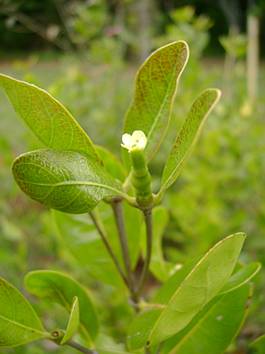
MALE FLOWERS |
MATURE FRUITS |
WEIBLICHE BLÜTEN |

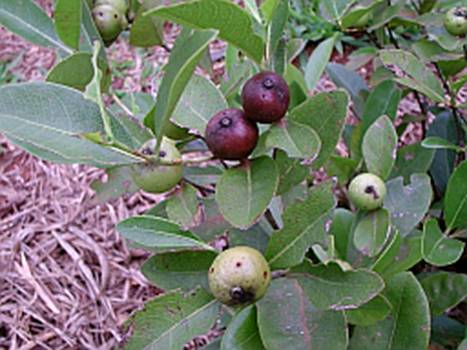
NATIVE NAME: Purui-peva comes from the Tupi-Guarani and means "sweet and sour fruit" because it strongly resembles the taste of the jam, which means with a sweet, pleasant, and Peva means boring or low. Also known as Marmelada de pinto or marmelinho do Campo.
Origin: Steppes and savannas in Brazil. More information in Portuguese at the link:
Features: Shrub to 60 cm tall, forming small clumps creepers with elliptical branches that emerge radially from the same point (xylopodium or underground roots), the roots are up to 1 meter. The plant is dioecious, with male and female on separate plants. The plants before flowering can not be distinguished. The female flowers are single and large, the small male in clusters.
Culture tips: Slow-growing shrub, which prefers red and sand soils with rapid rainwater drainage, tolerates light frosts down to -1°C. The plant bears fruit only in full sun and should be planted on virgin soil with a pH below 5.5. They can be planted in large pots with 40 cm of diameters and 50 cm of the size. At least 3 plants should be planted, since it is still not known whether male or female.
Propagation: The seeds are often attacked by larvae of various insects. Therefore, the fruit must be harvested immediately after the maturity and the seeds are washed thoroughly with water and then sown in a sandy substrate. Germination usually takes 60 days in summer, the seedlings reach a size of 10 cm in 8 months. The plant is slow growing and begins with the fruit after 2 years.
Planting: I recommend a planting in full sun at a distance of 2 x 2 m. The best time to plant is from November to January. After planting pour with 10 liters of water and every 15 days if it does not rain. The holes should not receive more than 2 liters of organic matter, because too much kills the plants.
Culture: The slow-growing plant needs no special treatment, the surface of the soil or the pot should be covered with rice straw or milled bark. Always remove any weeds, so the plant is not stifled. Fertilize with compost from decomposing leaves + 20% poultry manure. Nutrients to be distributed to 5 cm deep and 20 cm away from the trunk.
Use: Fruiting from October to January. The fruit has the flavor of the sweet potato, and consumed in nature and in the form of jelly.
BUY THE BOOK “COLECIONANDO FRUTAS”
Back to the seedlist (English) or back to Rubiaceae (Portuguese)