ODONTOCARYA ACUPARATA
POPULAR NAMES: ACAPARATA, UVA DO MATO AMARELA, ABÚTUA AMARELA, YELLOW FOREST BERRY
MENISPERMACEAE
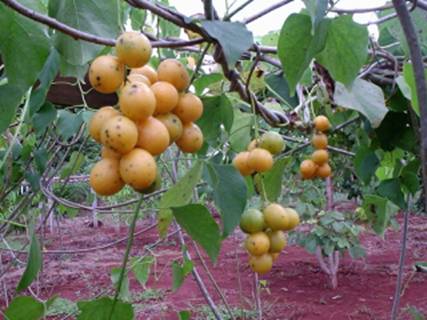
INDIGENOUS NAME: ABÚTUA comes from the Tupi guarani: Çapó-yutik-á, which was this: Capo by Ab; Yutik-á by utuá which mean "herb with root that turns to potatoes" this is the very striking feature in most species.
Origin: South America, occurs in all the forests and damp hillsides and generally limestone soil of the Atlantic Forest, Amazônica and the Pantanal of Mato Grosso.
Characteristics: The climbing plant is a stem winder, woody, lenticels (small salient points of breathing), covered with papyraceous, thin and peeling bark, of vigorous growth, with simple, opposite, cordate-based (like a heart) leaves and acuminate apex (long taper) under long and glabrous petiole (stem or support). The flowers are male or female and appear in racemes on separate plants in the axils of leaves or branches of defoliated specimens.
Planted in the site of Frutas Raras: October 2003, bear fruit in January 2006 for the first time.
Tips for
cultivation: Fast
growing climber which resists low temperatures (to -4°C (25°F)), and grows
from sea level to altitudes above
Propagation: The
seeds are hard, elongated and labeled it by the teeth in one end (that being
the reason for the scientific name of the genus (odontocarya - with teeth).
Germination occurs in
Planting:
Can be planted in full
sun and shade in forests with large well spaced trees, in this situation it
takes longer to bear fruit.
Space between plants
4 x 4 m (13 feet).
The espalier should
have 6 pillars, in the distance of 2 m (7 feet) between themselves and
Cultivating: Make
only form pruning and remove shoots that were grown from the base of the
stem, manage the branches by a tutor until they are fixed at the espalier.
Fertilize with
organic compost, may be (4 liters) poultry litter + 50 g of NPK 10-10-10 in
the months of November and December, distributed them to
Uses: The fruit rind is yellow, soft, slightly bitter and edible, the pulp is translucent and sticky, tasting sweetish. Can be consumed in-kind, but more usually used only as food for appeal in the absence of larger fruit. The fruit can be used to make liquor.
Flowering in the site of Frutas Raras: November to January.
Fruiting in the site of Frutas Raras: January to February.
Back to the seedlist (English) or back to Menispermaceae (Portuguese)